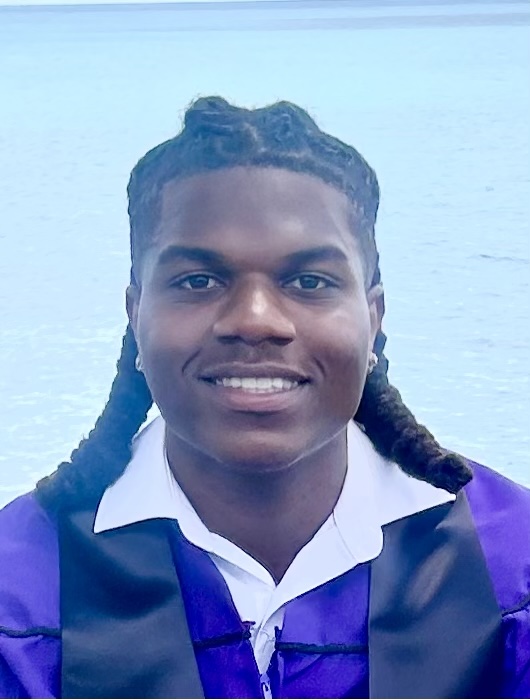
Braydon Nemelka had a wake-up call earlier this year when paid signature gatherers asked him to sign a petition to repeal Proposition 4, Utah's voter-approved ban on partisan gerrymandering.
"That was kind of a big, jarring thing for me," the 36-year-old Holladay resident told The Salt Lake Tribune in a story published Nov. 4. "But then, seeing how everything with data centers has gone and how decisions are being made without any input of the electorate and the voters, it just seems like it's all being decided based off of what the Republican Party wants from a national scale rather than what we as a state really want."
Nemelka is one of several Utah voters columnist Robert Gehrke profiled after the Nov. 3 election, in which corruption ranked as the top issue driving voters both nationally and in Utah, the Tribune reported.
A lifelong Utahn, Nemelka said the same mentality is behind attempts by U.S. Sen. Mike Lee and fellow Republicans to dismantle national monuments and remove protections for public lands.
"The defining feature of our state is our outdoor scenery and our national parks, and seeing how [Lee] is trying to get rid of those and free up land for outside bidders and donors," Nemelka said. "I think there's big personal gain for these guys and they don't really care about what it's going to do to our state."
He said politicians are not listening to constituents and believes too many "are trying to line their pockets by doing something that benefits them rather than the state as a whole," according to the Tribune.
A statewide pattern
Nemelka's frustrations mirror a broader shift in Utah politics. Preliminary results from the Nov. 3 election show Utah House Republicans on pace to lose their two-thirds supermajority for the first time this century, according to the Deseret News. Republicans could see their House majority shrink from 61 seats to as few as 44, based on early counts. Thousands of ballots still needed to be tallied as of Nov. 4.
Utah News Dispatch reported Democrats were in the lead to pick up 15 House seats, with unaffiliated candidates slated to take two more.
The backlash did not start on Election Day. Senate President Stuart Adams lost his primary race earlier in 2026, largely over the proposed Stratos data center in Box Elder County, the Deseret News reported. More than 60% of voters rejected Amendment B, a GOP-backed measure that would have required a 60% supermajority to pass tax-raising ballot initiatives.
Rep. Matt MacPherson, R-West Valley City, who trailed his Democratic challenger by more than 2,300 votes as of Nov. 4, called the decision to put Amendment B on the ballot "probably a strategic error."
Data centers at the center
Polling conducted before the election showed deep opposition to data center development. A Deseret News/Hinckley Institute of Politics poll in September found 66% of Utahns opposed the 20,000-acre Stratos Project. A separate Utah State University survey, reported by the Salt Lake Tribune, found 76% of residents opposed building more data centers in Utah, and 85% said public participation in data center decisions was "very important."
Nemelka said he hopes the election results lead to more checks on government and restored accountability at both the state and federal level.
Salt Lake County voters also weighed in on a $128 million parks bond, which was leading in early returns, as we reported Nov. 4. Final election results for several legislative races are expected in the coming days as counties finish counting ballots.