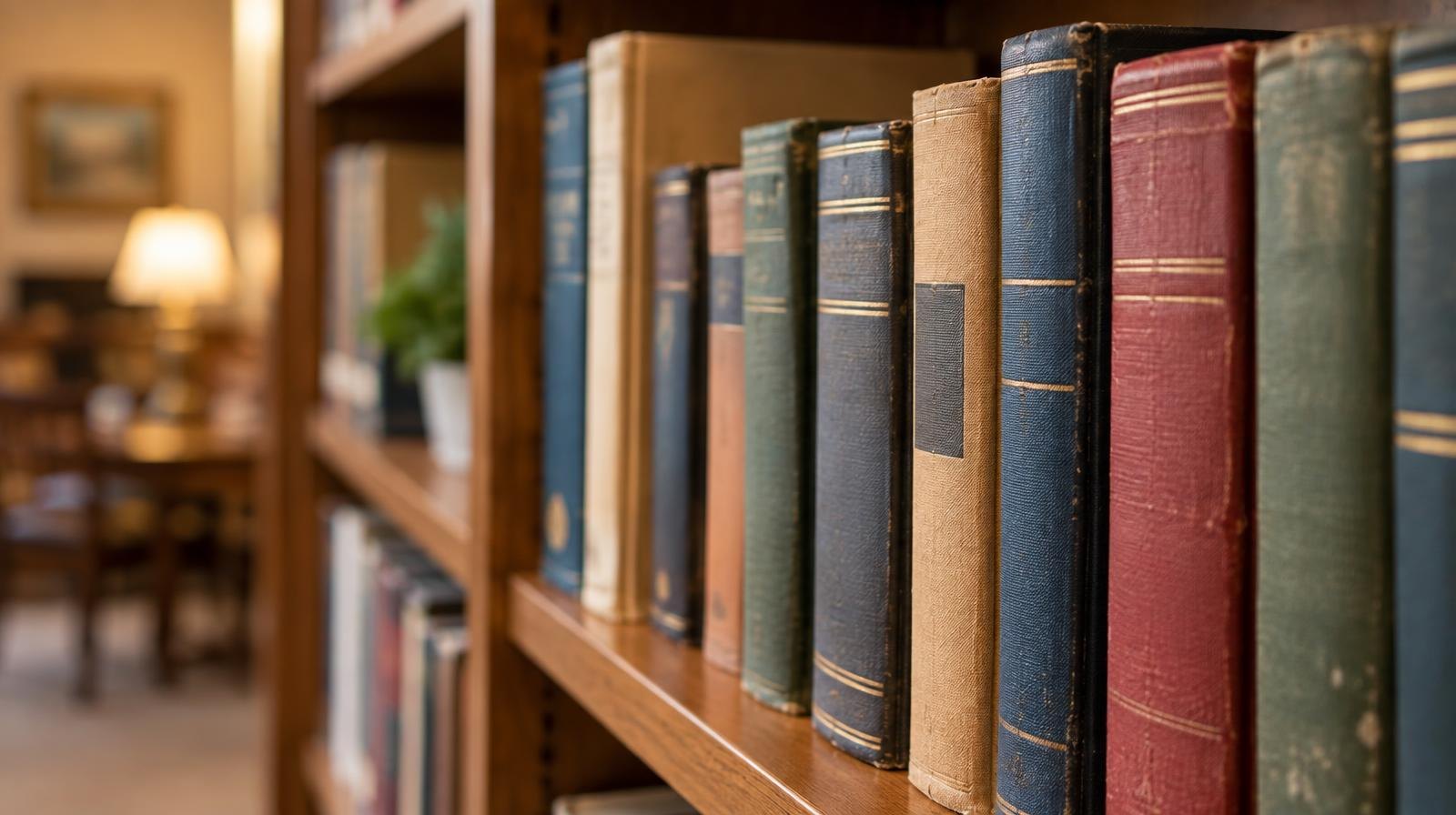
Seven books came off the shelves at every public school in Utah on Monday, Sept. 28, including campuses in the Canyons and Granite school districts that serve Cottonwood Heights and Holladay families.
The Utah State Board of Education banned the titles in the largest single batch since the state's sensitive materials law took effect, as first reported by the Salt Lake Tribune. The statewide total stands at 44 prohibited books.
The banned titles are "House of Earth and Blood" by Sarah J. Maas, "Perfect" and "Identical" by Ellen Hopkins, "Me and Earl and the Dying Girl" by Jesse Andrews, "Kingdom of the Cursed" by Kerri Maniscalco, "Storm and Fury" by Jennifer L. Armentrout and "The Invisible Life of Addie LaRue" by V.E. Schwab. None had been available in elementary schools.
Maas has become the most banned author in Utah with seven titles on the list.
Hopkins follows with six.
How the law works
Under HB 29, signed in 2024, a book must be pulled from every public school if at least three districts determine it contains "objective sensitive material." The state defines that term as pornographic or indecent content, as the Holladay Journal reported in March. The seven new titles primarily reached the three-district threshold through Davis, Jordan and Tooele districts, Book Riot reported.
Both local districts have participated in the removal process. A federal court order in the lawsuit challenging the law states that Canyons School District has banned and removed books under the statute. Granite School District had removed about 106 books as of the February 2026 complaint.
As we reported Monday, Sept. 28, a federal judge's ruling could reshape how both districts handle future book-removal votes.
Authors fight back
Several of the affected authors are suing the state. U.S. District Judge Robert J. Shelby ruled Sept. 15 that the lawsuit, Caged Bird Legacy v. Brown, can proceed. The plaintiffs include Hopkins, Elana K. Arnold, Amy Reed and entities representing Kurt Vonnegut and Maya Angelou. Shelby found the authors suffered financial, reputational and professional harm, ABC4 reported.
Hopkins wrote on her website that she chose the subject matter of "Identical," her 2008 novel dealing with sexual abuse, because the issue touched the lives of three of her friends. She said she wants readers to know "it is possible to find a way beyond this terrible place, into a brighter future."
Rep. Carol Spackman Moss, D-Holladay, a former teacher, criticized the underlying law in July. "This is the antithesis of local control," Spackman Moss said, according to the Millcreek Journal. "With this bill, just a couple of individuals can take away the rights of parents statewide to make choices that best fit their children's needs."
Of the 44 books banned statewide, 33 are by women, according to Book Riot. Twenty-five titles have been added since January 2026 alone.
Banned Books Week runs Oct. 4–10. The federal lawsuit is still pending.