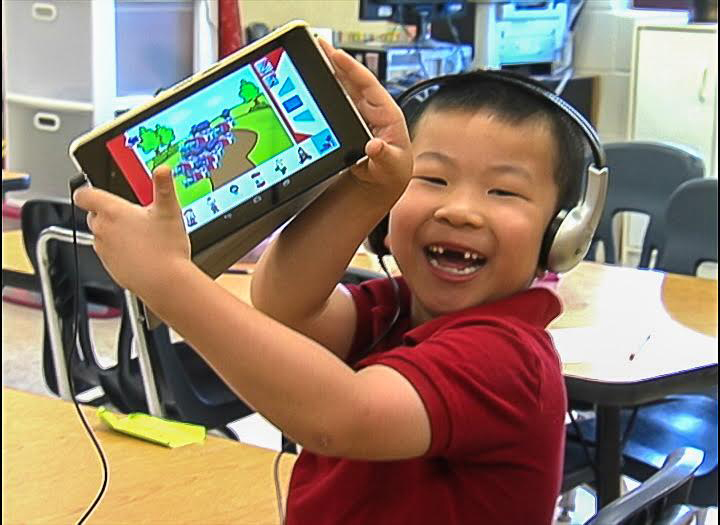
A Utah law restricting screen time in kindergarten through third-grade classrooms took effect Tuesday, July 1, covering every public elementary school in the state. That includes schools serving Cottonwood Heights and Holladay families in the Canyons and Granite districts. Neither district has publicly announced how it will comply.
HB0273, sponsored by Rep. Ariel Defay, R-Kaysville, largely prohibits classroom screen time for K-3 students, with narrow exceptions for teaching basic computer science standards and administering state assessments. Schools cannot require a one-device-per-student ratio in those grades. Students cannot take school-issued devices home, and homework cannot require internet access or technology.
What changes for older students
For grades four through six, screens may still be used but must be supervised by teachers, tied to a specific academic purpose, and balanced with traditional instruction. Devices still cannot go home.
Middle school students may take school-issued devices home only with written parental consent. High school students can generally keep devices unless parents opt out.
The law also bars students from using generative AI to complete schoolwork unless a teacher specifically authorizes it. AI tools cannot independently grade student work or make high-stakes academic decisions, and schools must notify parents if generative AI is used in instruction.
Reading software conflict looms
One unresolved question hits close to home for local elementary schools. The K-3 screen ban may conflict with Utah's Early Intervention Reading Software Program, which uses adaptive computer-based literacy tools for young readers statewide. A Utah State Board of Education report from October 2025 found that the state's share of third graders reading on grade level would have been roughly four percentage points lower without the software. In 2025, 149,428 students across 726 Utah schools used these programs.
USBE has not issued guidance on how to reconcile the two policies.
Districts waiting on state board
The Utah State Board of Education has until the end of December 2026 to draft a model technology and AI policy. Local districts, including Canyons and Granite, must then develop their own policies aligned with that guidance.
"We're trying to help kids build healthier habits with technology," Gov. Spencer Cox said at a May 2026 press conference. "We're not going to get this exactly right on the first try, but we're certainly moving in the right direction."
Defay told the Utah House during debate on the bill in March that the motivation was straightforward. "We've seen the increase of technology, and we aren't seeing technology translate into better student outcomes," she said, adding that the goal is to balance screens with "analog versions, teacher instruction, conversation, all the traditional methods of education."
Utah is one of six states to pass screen-time legislation this year, and its K-3 ban is among the most restrictive, according to Education Week.
No specific USBE board meeting date for public comment on the model policy has been announced. Families who want to weigh in should monitor the USBE meeting calendar at schools.utah.gov for upcoming rulemaking sessions before the end-of-year deadline.
.jpg)