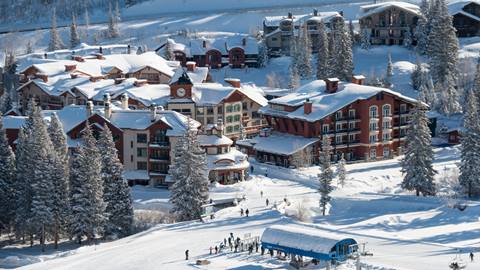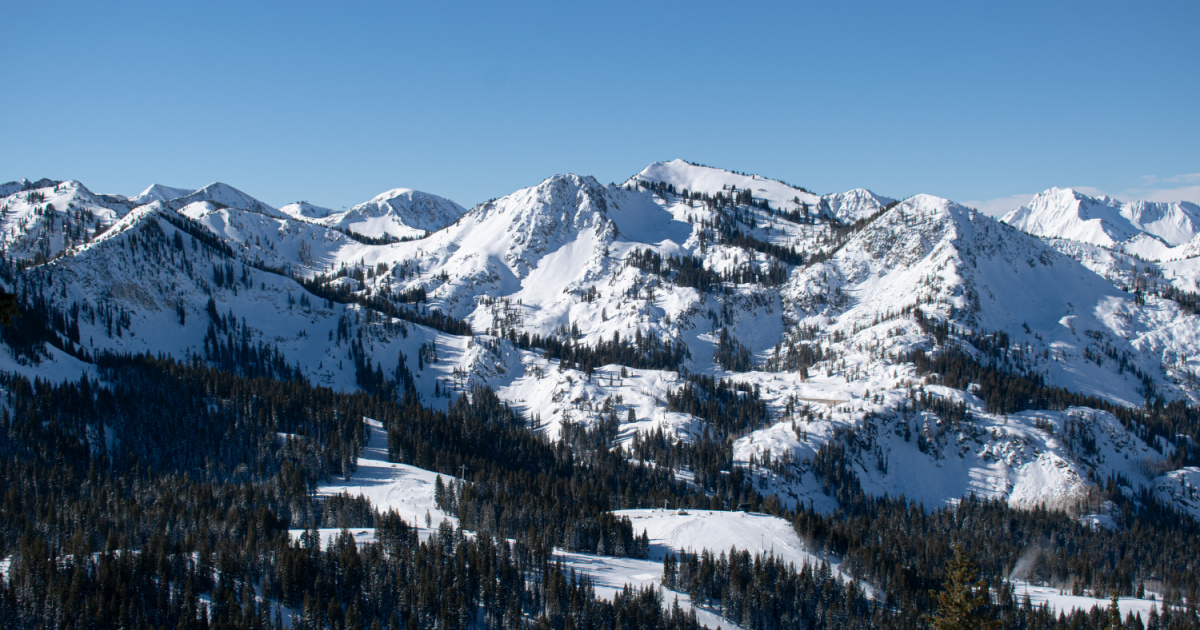
Utah's ski industry lost more than a quarter of its visitors during the 2025-26 season, and few places felt the impact more directly than Brighton Resort and Big Cottonwood Canyon, the backyard playground for Cottonwood Heights and Holladay residents.
The Kem C. Gardner Policy Institute reported Aug. 20 that Utah recorded just 4.8 million skier days last season, a 26.5% drop from the 6.5 million logged in 2024-25. Total skier spending fell 17.8% to $2.1 billion, down from $2.5 billion the year before, according to ABC4.
"I would say the ski industry had a unique situation in this past season in 2025-26 with a historic low snowfall, and we saw about a 27% decline in skiers and snowboarders to Utah," said Jennifer Leaver, senior tourism analyst at the Gardner Policy Institute, on Aug. 20.
Record-low snow, record-high costs
The culprit was historic drought. Utah's snowpack fell to the fourth percentile for the season, meaning conditions were worse only about 4% of the time on record, according to Jordan Clayton, snow survey team supervisor at the USDA Natural Resources Conservation Service. Brighton Resort opened late, on Dec. 2, 2025, and closed May 3, 2026.
Brighton vice president of marketing Jared Winkler told the Daily Utah Chronicle in January that the resort leaned heavily on snowmaking to keep runs open, calling it expensive and requiring "significant water, electricity, and labor." He characterized the season as "a funky year" but said consecutive bad years would be needed to signal a bigger change.
Why it matters at the canyon's mouth
About 90% of vehicles entering Big Cottonwood Canyon during peak winter periods are headed to Brighton or Solitude, according to a November 2024 UDOT presentation to the Cottonwood Heights City Council. The canyon draws roughly 3.2 million visitors annually, a figure UDOT expects to grow as the Wasatch Front adds an estimated 1 million residents by 2050.
UDOT issued a Record of Decision in May 2026 for a $264.5 million transportation plan that includes enhanced bus service, congestion-based tolling and a 1,750-stall mobility hub near the canyon's base, with construction potentially starting in 2028. As we reported Aug. 20, UTA has also proposed raising the ski bus fare to Big Cottonwood Canyon to $6.
International spending on Utah ski tourism dropped as well. Spending from Canada, Utah's largest international market, and China each fell 22 to 23%, according to the Gardner Policy Institute. Overall international visitor spending was down about 6% in 2025.
A silver lining and a snowy forecast
The skiers who did show up spent more. Per-skier spending hit a record $392, up from the prior year's average. Tourism supports one in ten Utah jobs statewide, the institute noted.
Looking ahead, Natalie Randall, managing director of the Utah Office of Tourism, said Aug. 20 that officials are optimistic about a predicted Super El Niño rescuing the 2026-27 season. NOAA gives a 97% chance El Niño persists through early spring 2027, with an 81% chance of a very strong event this fall.
OpenSnow forecaster Evan Thayer wrote in the Deseret News on Aug. 19 that "the strongest El Niño on record, 1982–83, didn't play by the 'meh for the Wasatch' rulebook at all — the Cottonwoods reportedly picked up 800 to 900 inches that season."
Brighton's opening date for the 2026-27 season has not been announced.