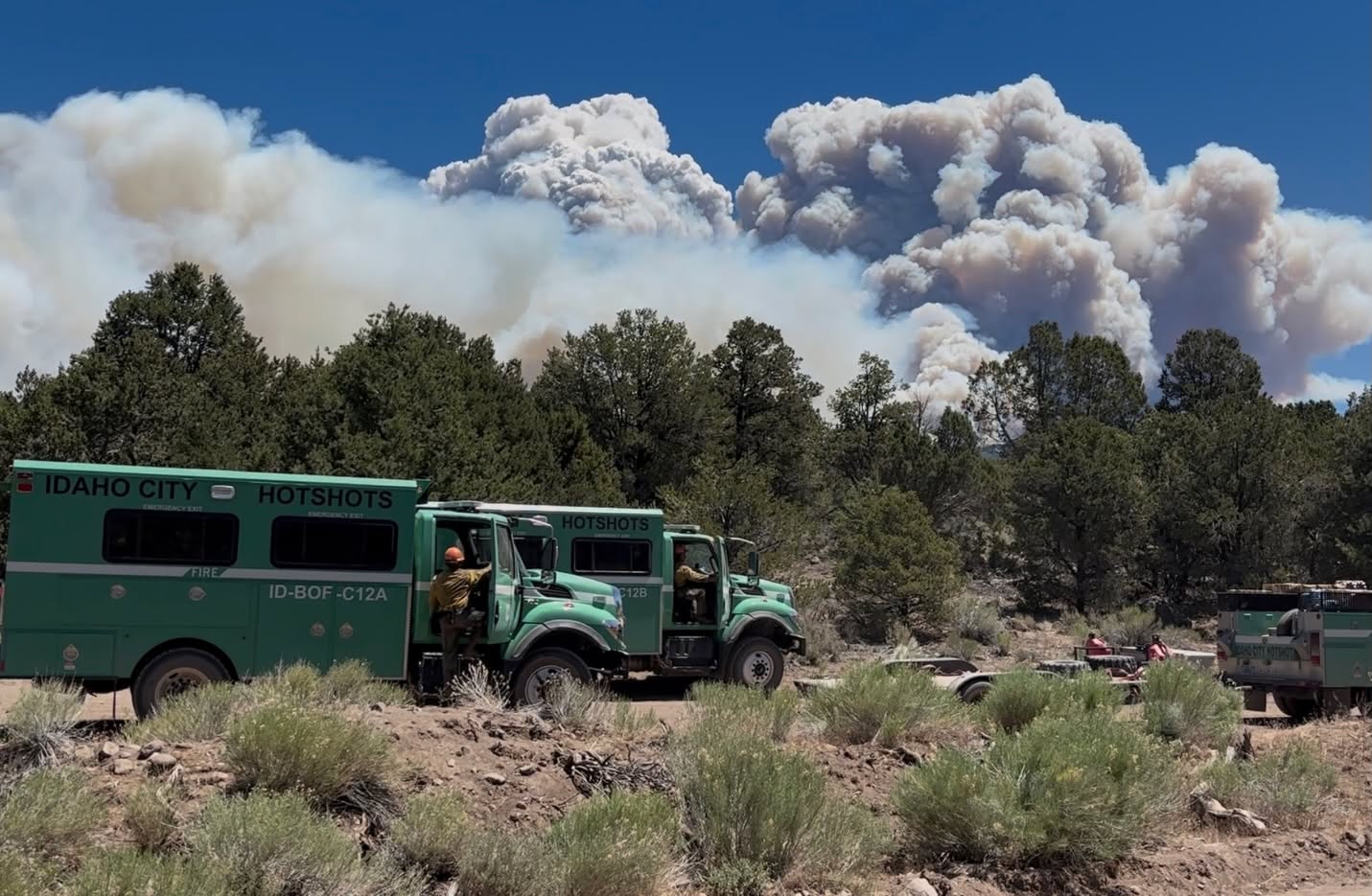
Wildfire smoke drifting into the Salt Lake Valley is prompting state air quality officials to urge residents, including those in Cottonwood Heights and Holladay, to limit their exposure. No formal air quality advisory had been issued for Salt Lake County as of Saturday, July 18, but conditions can shift quickly as winds push smoke plumes toward the Wasatch Front.
The nation reached Preparedness Level 5 on Saturday, July 18, meaning all available federal firefighting resources are committed, according to Utah Fire Info. Four large wildfires are burning across the state: the Babylon Fire at 107,173 acres and 93% contained, the Cottonwood Fire at 97,464 acres, the Wild Goose Fire at 12,665 acres and the Stookey Fire at 10,337 acres.
Bryce Bird, director of the Air Quality Division at the Utah Department of Environmental Quality, said the combination of heat and smoke creates a compounding danger for vulnerable populations.
"Once you smell that acrid smoke smell and start feeling that irritation, that's a really good indication that those particle levels are increasing and at a time to reduce your exposure to those particles, especially if you're sensitive," Bird said Saturday, July 18.
Bird said air pollutants in wildfire smoke can trigger asthma attacks and, at higher concentrations, heart attacks. He recommended moving indoors, where home filtration systems can reduce particle exposure. The Utah DEQ also recommends that the elderly, children and those with pre-existing lung or heart conditions wear a well-fitting N95 mask when outdoors.
2026 fire season far above average
The 2026 wildfire season is running well above normal. As of mid-July, 40,357 wildfires had burned more than 3.8 million acres nationally, according to Utah Fire Info. The U.S. National Interagency Fire Center reported that figure represents almost 10,000 more fires and nearly a million more acres than the 10-year average.
Jon Meyer, Utah's assistant state climatologist, told CBS News on Thursday, July 17, that prolonged drought, record heat and historically low snowpack have all converged. Utah's 2026 snowpack was the worst in 50 to 75 years, according to researchers.
The Babylon Fire, Utah's largest, started Friday, June 26, on the Manti-La Sal National Forest outside Monticello. Federal agencies had spent nearly $42 million fighting it as of Tuesday, July 15, deploying more than 1,500 firefighters, helicopters, air tankers and drones, according to NPR.
How to protect yourself
Residents can check real-time air quality readings at air.utah.gov, the Utah DEQ's official monitoring site for Salt Lake County and statewide conditions.
.jpg)