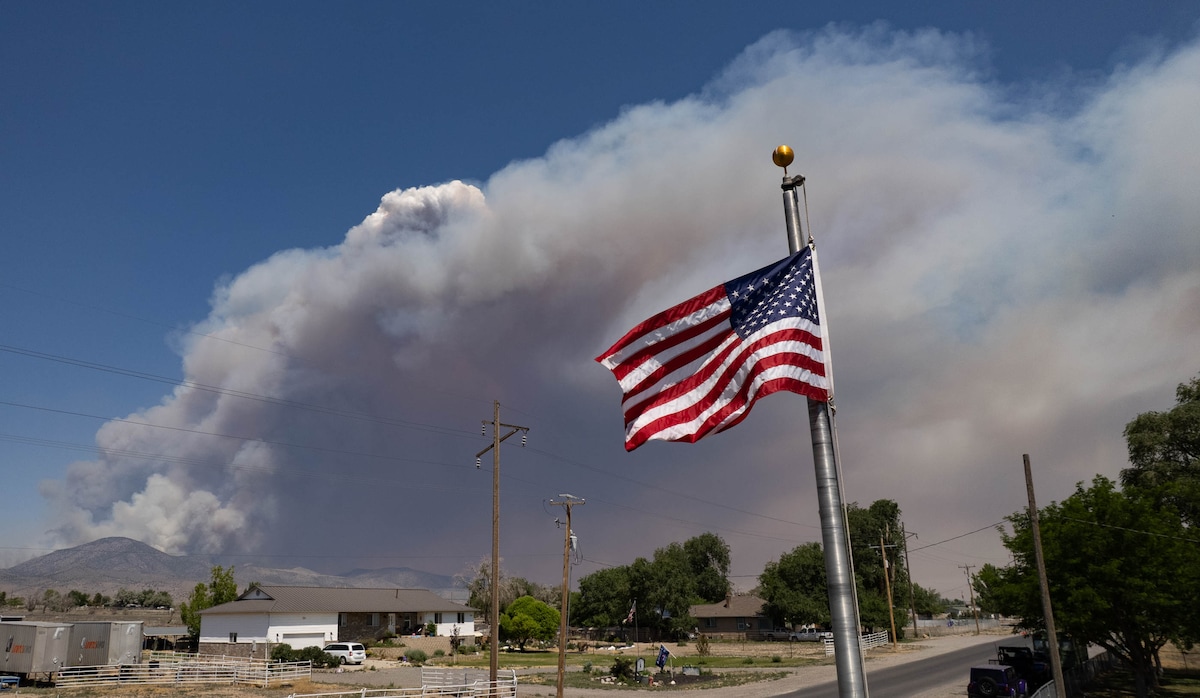
Wildfire smoke drifting across the Salt Lake Valley pushed the area's PM2.5 Air Quality Index to 68 on Tuesday, July 14, and Utah air quality officials are urging residents to cut back on outdoor time, particularly anyone who hikes Big Cottonwood Canyon or exercises at neighborhood parks.
The reading, classified as "Moderate" by the Utah Department of Environmental Quality, hit a two-day high of 76. At that level, people with asthma or other respiratory sensitivities face elevated risk from fine particles in the smoke.
Bryce Bird, director of the DEQ's Air Quality Division, said high temperatures and smoke together compound the danger. He urged residents to pay attention to physical cues.
"Once you smell that acrid smoke smell and start feeling that irritation, that's a really good indication that those particle levels are increasing and at a time to reduce your exposure to those particles, especially if you're sensitive," Bird told ABC4 on Monday, July 13.
Bird said smoke particles can trigger asthma attacks and, at higher concentrations, heart attacks. The elderly, children, and anyone with pre-existing lung or heart conditions are most at risk.
What residents should do
Bird recommended three steps: move indoors when smoke is visible or irritating, rely on home filtration systems to reduce particle exposure, and wear a well-fitting N95 mask if you must be outside.
For hikers heading up Big Cottonwood Canyon or runners on local trails, the advice is simple. If you can smell smoke, cut the workout short.
No canyon-specific AQI readings are available. The Salt Lake Valley measurement covers the broader area, but conditions at higher elevations may differ. Residents can check real-time air quality at deq.utah.gov or AirNow.gov before heading out.
What's driving the smoke
Utah recorded roughly 353 wildfire incidents by early July 2026, with 268 human-caused (about 76%), according to Utah Fire Info. The state's 2026 snowpack was the lowest on record since measurements began in the 1930s, leaving fuels extremely dry.
As of Friday, July 10, four large wildfires were burning across Utah, according to the National Interagency Fire Center. Smaller brush fires have been igniting nearly every day since.
Jamie Barnes, director of the Utah Division of Forestry, Fire and State Lands, told the Daily Utah Chronicle that below-average snowpack melted off earlier than usual, drying out sage and other vegetation to historic lows. Peak wildfire season in Utah runs July through October.
Upcoming community events
Cottonwood Heights' annual Butlerville Days festival runs Thursday, July 16 through Saturday, July 18 at Butler Park, 7500 S. 2700 East. Events begin at 4 p.m. Thursday and Friday, noon Saturday, with a parade Saturday starting at 3500 East Bengal Blvd. Check AQI readings at deq.utah.gov before spending extended time outdoors.